How to Close a Deal Without Another Sync Call
Three deal-room patterns that move late-stage deals while you sleep.
The most expensive moment in B2B sales is the late-stage deal that needs "one more call to align."
Calendar tag, reschedule, bumped, finally happens 9 days later. The deal that was hot last Tuesday is lukewarm by the time you re-engage. Sometimes it cools entirely.
Three deal-room patterns let you close those moments without another sync. None require any special setup beyond a deal room you already have.
Pattern 1: The objection-killer addendum
When to use it: Buyer raised an objection on the last call ("we're worried about X"). Standard response is to schedule another call to "address that concern." Standard outcome: 5-day delay, deal cools.
The pattern:
- Within 30 minutes of the call, add a new block to the deal room titled "[Objection name] — answered"
- Inside the block: a 200-word direct response, plus 1-2 supporting links (case study where this objection came up, security doc, comparison to the alternative they're worried about)
- Send a one-line message: "Added an answer to the [objection] concern in your pod — link's the same. Take a look when you have a sec."
Why it works: the buyer engages with the response on their schedule. No calendar tag. No "let's set up a call." The objection gets handled in the medium where it can be reviewed by the buyer's team without you in the room.
Bonus: if the buyer's CFO was the source of the objection, they can review it without a meeting. CFOs hate meetings. They will read a paragraph.
Conversion lift we've measured: deals where this pattern is used vs. deals that schedule a follow-up call resolve 3-4 days faster on average, with similar close rates.
Pattern 2: The auto-shipped pricing approval
When to use it: You're in the pricing-negotiation phase. The buyer needs CFO approval. Standard motion: AE forwards the proposal to the buyer's champion, who forwards to the CFO, who has questions, who emails back, who waits for the AE's response.
That email chain takes 1-2 weeks.
The pattern:
- In the deal room, add a "Pricing approval pack" block
- Include: the proposal, the ROI calculation, the FAQ for the CFO ("what if we don't expand?"), the security/SOC2 doc, the contract redline preview
- Send the link directly to the champion: "Forward this whole link to your CFO — they'll have everything they need to approve."
Why it works: the CFO opens one URL instead of receiving a 6-email forward chain. The materials answer the most common CFO questions before they're asked. Approval cycle compresses from 1-2 weeks to 2-3 days.
Critical detail: address the CFO's specific concerns in the block, not in a follow-up email. A CFO who clicks the link and finds answers to their question doesn't email back asking for the answers. A CFO who clicks the link and finds a marketing pitch emails back with friction.
Pattern 3: The technical-eval bypass
When to use it: Late-stage deal where the buyer's tech lead wants to "test the integration." Standard motion: schedule a 90-minute technical demo. Often gets bumped 1-2 times before it happens.
The pattern:
- In the deal room, add a "Technical eval" block
- Include: API docs link, 5-minute Loom video showing the integration in action, a sandbox environment with credentials pre-provisioned, a Slack channel for live questions during their evaluation
- Send the link to the tech lead with: "Here's everything for the eval. Sandbox is live. Slack me directly with any questions."
Why it works: technical evaluators want to do the eval, not attend a meeting about doing the eval. Giving them direct access lets them eval at their pace, on their schedule. They form an opinion based on actual usage, not a curated demo.
The risk: tech evaluators sometimes find issues you'd have prevented in a guided demo. That's actually good. You'd rather find those issues in the eval than after contract signing. Faster eval, fewer post-sale surprises.
When you still need the call
Three situations where a sync call wins over an async motion:
- Trust-building moments — the first call with a new champion, the close call with the economic buyer, the renewal kickoff
- Negotiation — back-and-forth on terms that need real-time judgment
- Crisis recovery — a deal that just went sideways and needs a relationship reset
Everything else is fair game for the async patterns above.
The question isn't "can this be done async?" The question is "is the sync call adding signal beyond what the deal room provides?" Most late-stage sync calls don't. They're added because that's how everyone learned to sell, not because the deal needs them.
What this means for your team
The hardest mental shift for AEs is: every late-stage call you don't schedule is a deal that closes 3-5 days faster.
Audit your last 10 closed deals. How many sync calls happened in the last 14 days before close? If the answer is more than 2, you have async opportunity.
Replace one sync call per deal with one of the three patterns above. Watch your time-to-close compress within a quarter.
Want to ship deal-room blocks in 30 seconds without leaving your CRM? Co-Lab integrates with HubSpot, Salesforce, and Slack. Free at colabapp.ai, code SALES for 3 months.
More from the blog
Keep reading.
The Death of the Email-Deck-Loom-Spreadsheet Cycle
Why the standard B2B sales follow-up is the worst buyer experience in software, and what's replacing it.
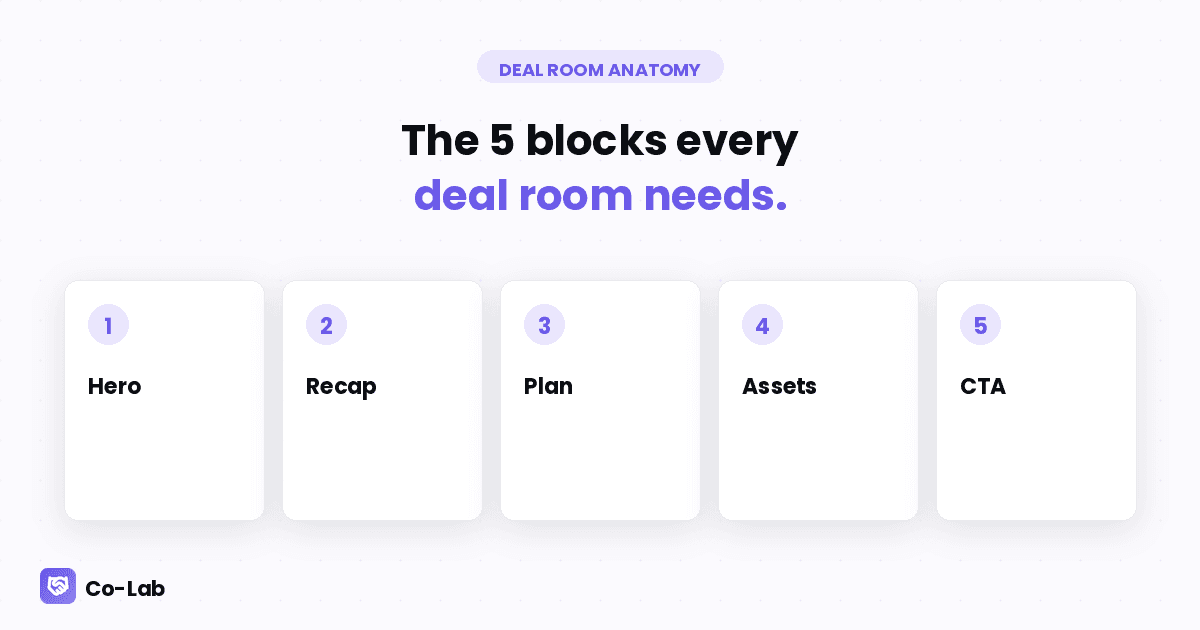
The 5 Blocks Every Deal Room Needs (And the 9 You Don't)
A minimum-viable structure for buyer-facing deal rooms — and the blocks teams add that don't move the needle.
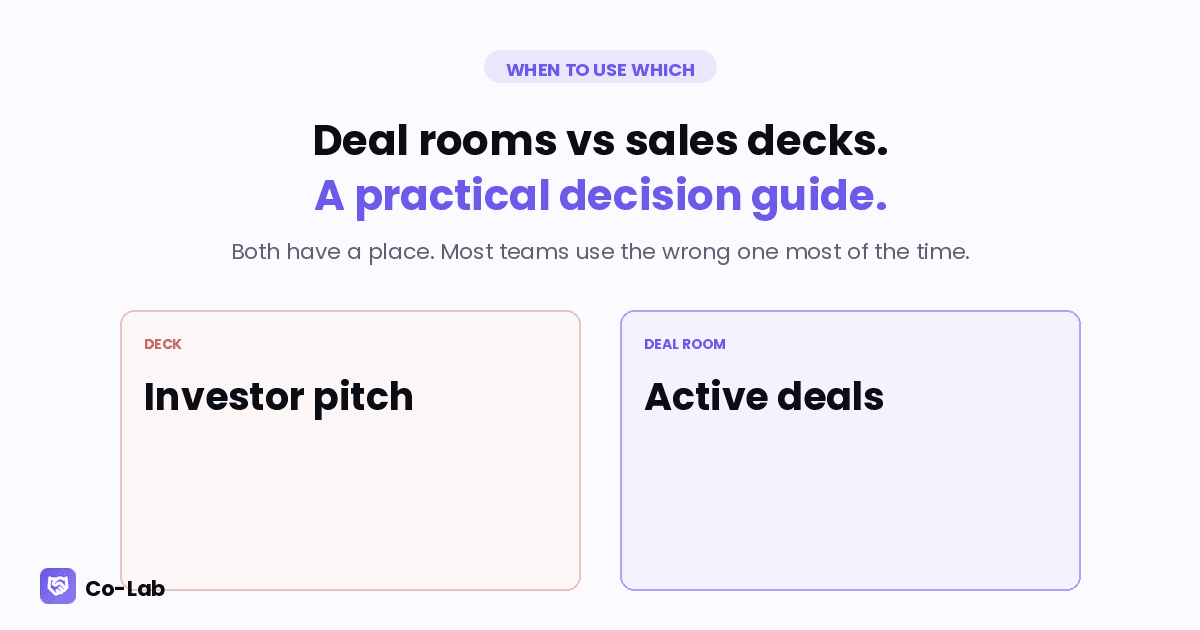
Deal Rooms vs Sales Decks: When to Use Which
A practical decision guide for sales leaders who've been told "decks are dead" but still need them sometimes.